Introduction
Relationship Between Religion and Morality,For centuries, scholars, theologians, and philosophers have debated a fundamental question: What is the relationship between religion and morality? Are moral values derived from religious teachings, or can ethics exist independently of faith? While different societies offer various answers, one truth remains consistent—religion and morality are closely linked in shaping individual behavior, community standards, and cultural norms.
In this article, we explore how religion influences moral development, whether morality can exist without religion, and how both work together in forming ethical societies.
Table of Contents
Understanding Religion and Morality
Before diving into the relationship, it’s important to define both concepts:
• Religion serves as a structure of convictions, customs, and principles centered on a Supreme Being or divine reality. It often includes ceremonies, holy writings, and moral standards.
• Morality pertains to the principles that delineate right from wrong, which steer human conduct. It encompasses notions such as honesty, justice, compassion, and integrity.
Relationship Between Religion and Morality,While religion offers a framework for understanding the universe and our place in it, morality guides how we treat others and live our daily lives.
How Religion Shapes Moral Behavior
Many world religions—including Hinduism, Christianity, Islam, Buddhism, and Judaism—have sacred texts that offer moral guidelines. These include commandments, teachings, and parables that promote ethical behavior.
Examples of Moral Teachings in Religion:
- Hinduism places significant importance on Dharma (righteous duty), Ahimsa (non-violence), and Satya (truthfulness).
- Christianity teaches love, forgiveness, and the Golden Rule: “Do unto others as you would have them do unto you.”
- Islam upholds values like charity (Zakat), justice (Adl), and compassion (Rahmah).
- Buddhism encourages ethical conduct through the Eightfold Path, which includes right speech, right action, and right livelihood.
These moral principles are deeply embedded in religious doctrines, and followers are encouraged to follow them.
Religion as a Source of Moral Authority
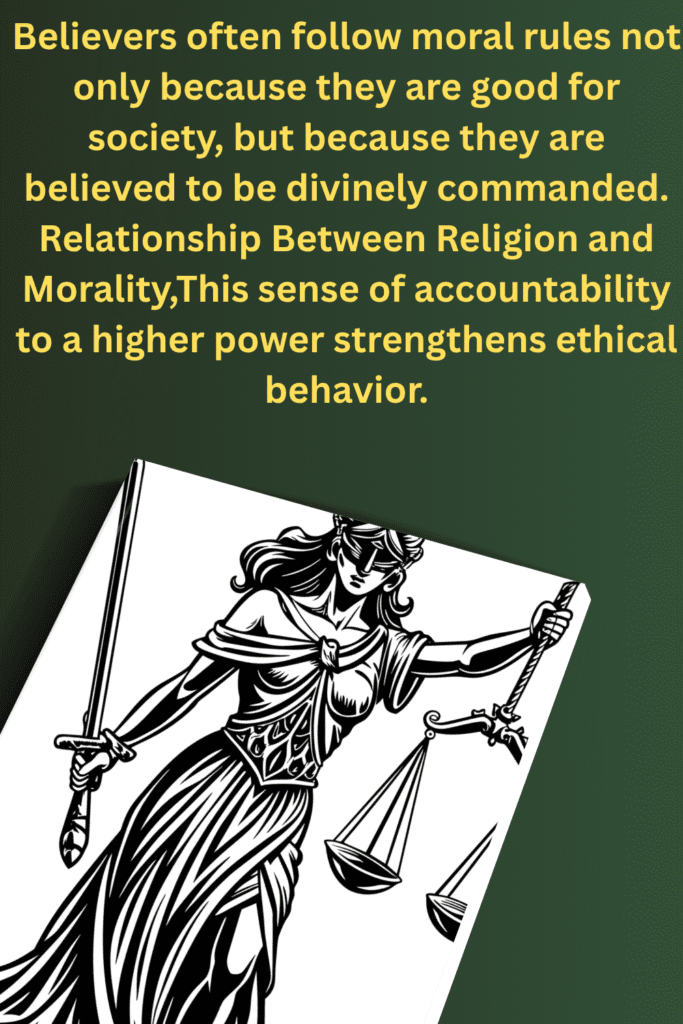
One of the primary functions of religion in the realm of morality is to offer moral authority. Believers often follow moral rules not only because they are good for society, but because they are believed to be divinely commanded. Relationship Between Religion and Morality,This sense of accountability to a higher power strengthens ethical behavior.
When people believe that their actions are being watched or judged by a divine being, they may be more likely to act ethically—even when no one else is watching. This idea is supported by research showing that people who practice religion regularly are often more charitable, cooperative, and community-focused.
Morality Without Religion: Is It Possible?
A common question arises: Can someone be moral without religion? The answer, from both philosophical and psychological perspectives, is yes. Morality can be grounded in:
- Human reason and empathy
- Social norms and laws
- Cultural traditions and secular ethics
Thinkers like Immanuel Kant, John Stuart Mill, and modern secular humanists have developed ethical systems without referencing any divine authority. Relationship Between Religion and Morality,These approaches focus on human well-being, fairness, and universal human rights.
In secular societies, moral education is often based on shared human values rather than religious doctrine. Concepts such as respect, honesty, and justice are taught in schools and reinforced through laws and social expectations.
Areas of Agreement between Religion and Secular Morality
Despite differences in origin, religious and secular moral systems often overlap significantly. Both typically promote:
- Honesty and truthfulness
- Kindness and compassion
- Respect for others’ rights
- Fairness and justice
- Responsibility and accountability
This overlap suggests that while religion can be a strong motivator for moral behavior, many values are universal and may stem from shared human experiences and social needs.
Religion, Morality, and Cultural Influence
Religion and morality are not isolated concepts; they are shaped by cultural, historical, and social contexts. In some regions, religion plays a dominant role in shaping moral views, while in others, secular ethics may take the lead.
For example, in many Eastern cultures, religion and morality are deeply intertwined with cultural practices and familial duties. Relationship Between Religion and Morality,In more secular Western societies, moral principles may be based on democratic values, human rights, and scientific reasoning.
However, even in secular societies, religious values often leave a lasting imprint. Many Western legal systems, for instance, are historically influenced by Jude-Christian ethics.
The Role of Religion in Moral Development
Children who grow up in religious households often receive early moral education through stories, rituals, and parental guidance. They learn concepts like:
- Right vs. wrong
- The importance of forgiveness
- Gratitude and humility
- Helping others in need
Religious communities also serve as moral support systems. Through places of worship, social events, and charitable initiatives, individuals are encouraged to practice values like generosity, empathy, and service.
Religion and Moral Challenges
While religion often promotes moral behavior, it is not immune to moral failures. History has witnessed instances where religious institutions or leaders engaged in unethical practices—such as discrimination, violence, or corruption.
Moreover, rigid or extreme interpretations of religious morality can sometimes lead to:
- Intolerance of other beliefs or lifestyles
- Suppression of individual rights (e.g., women’s or LGBTQ+ rights)
- Conflict between different religious or moral systems
To address these challenges, many modern faith leaders advocate for compassionate, inclusive, and contextual interpretations of religious ethics that align with universal human rights.
Interfaith and Secular Collaboration on Moral Issues
In today’s world, moral challenges such as poverty, injustice, climate change, and inequality affect everyone—regardless of belief. Religious groups, secular organizations, and governments often collaborate to address these global concerns.
For example:
- Faith-based organizations and NGOs work together on humanitarian aid
- Interfaith dialogues promote peace and understanding
- Ethical frameworks from multiple traditions inform policies on human rights and environmental care
This partnership embodies a common ethical objective: to foster a world that is more equitable, empathetic, and sustainable.
Conclusion
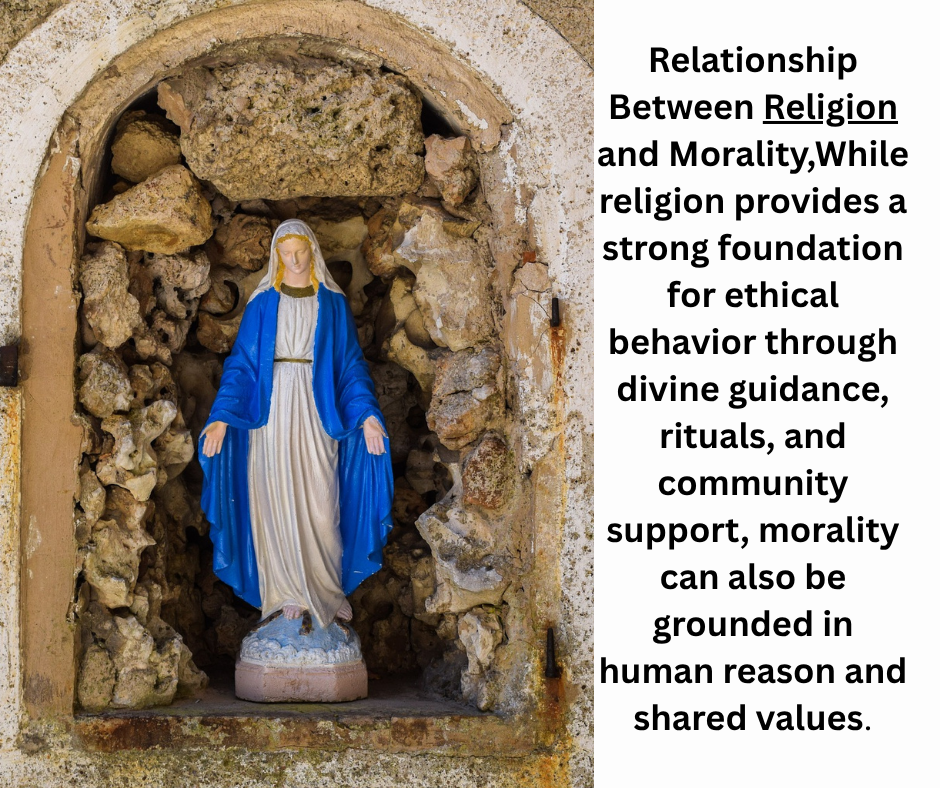
Religion and morality have a complex, dynamic, and highly influential relationship .Relationship Between Religion and Morality,While religion provides a strong foundation for ethical behavior through divine guidance, rituals, and community support, morality can also be grounded in human reason and shared values.
Ultimately, religion and morality often work hand in hand to promote justice, compassion, and the common good. Whether rooted in faith or secular thought, ethical living remains essential to building respectful, peaceful, and thriving societies.